
The WESTEMS™ software provides an efficient tracking and evaluation toolset to help utilities to meet surveillance requirements of the plant’s fatigue aging management program. The results are also beneficial for the purposes of long-term operation and license renewal.
Designed as a dual-use technology, the WESTEMS™ software is used, for both fatigue monitoring and design analysis purposes. With the monitoring subsystem, key plant component fatigue locations are modeled for evaluation of applied transient conditions, using a dedicated computer and existing plant sensor data without the need for additional instrumentation. WESTEMS™ monitoring models simulate and evaluate plant systems and components to appropriately track both applicable transient cycles and/or fatigue usage factors.
Beyond reports that satisfy component qualification requirements, the WESTEMS™ software also provides:
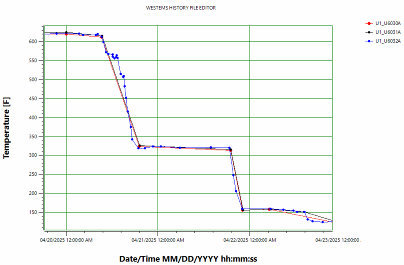
The attributes listed above are beneficial for plants in all stages of life, however the WESTEMS™ software also provides the following benefits for plants in or considering long term operation:
Typical WESTEMS™ monitoring system deliverables include the software installation package, user documentation, software training, plant-specific system documentation and monitoring project files, ongoing user support, and software maintenance. Where the remote monitoring option is selected, deliverables include surveillance and monitoring results reported on a user-defined periodic basis.
Westinghouse has provided WESTEMS™ monitoring systems to over 18 nuclear power plant units in the United States and Europe.
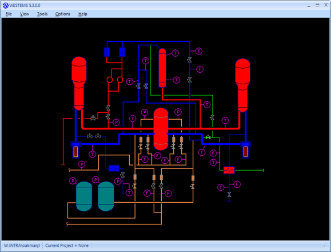
The WESTEMS™ software is a Microsoft® Windows®-based integrated diagnostics and monitoring system. It is modular in design, using project-based models and a family of plug-in programmable components.
Installation of the WESTEMS™ monitoring software and project models at a plant site requires a dedicated computer/server that is integrated with the plant computer data historian to acquire plant data from existing sensors. As an alternative to processing the monitoring system on-site, the required plant data can also be sent to Westinghouse for monitoring services to be provided remotely by engineers trained in system transient evaluation and fatigue aging management.
The WESTEMS™ software employs stress-based fatigue monitoring models, using detailed Green’s function stress models with six-component stress tensors. All Westinghouse component structural analysis services that use WESTEMS™ models to perform ASME BPV Code fatigue analyses can be configured for monitoring purposes for relatively little additional cost. New monitoring models can be added to a plant-specific monitoring system at any time and require no change to the software. This technology results in an overall reduction of life-cycle engineering costs of equipment and services.
The WESTEMS™ software brings a significant advantage over traditional stress analysis methods through the use of integrated models, advanced analysis techniques, and efficient data management strategies. Cost reductions may also be obtained when analyzing new or unanticipated transients or considering actual plant transients during a re-qualification. In addition, fully developed models can be used for independent tasks like design basis fatigue evaluations, EAF analysis, or fracture mechanics qualifications.
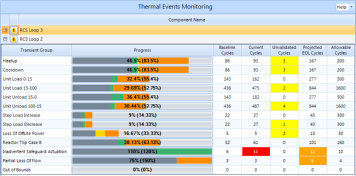
The power and versatility of the WESTEMS™ integrated system are demonstrated in the following features:
The WESTEMS™ software provides surveillance activities like Technical Specification cycle counting, unanticipated event qualification, and thermal stratification monitoring, in addition to fatigue usage monitoring. These features help achieve superior levels of surveillance and awareness concerning the structural integrity of the primary system, and related systems and components.
The WESTEMS™ software also provides plants with a feedback loop that helps operations engineers proactively identify and understand unanticipated transients before they challenge the plant's licensing basis. By leveraging monitoring diagnostic tools, the WESTEMS™ software enables engineers to quickly diagnose unanticipated transients, evaluate them against licensing basis assumptions and/or criteria, and support continued operations. The result is faster, data‑driven engineering insight that can be used to improve overall plant reliability and sustain long-term operations.