The Westinghouse Solution
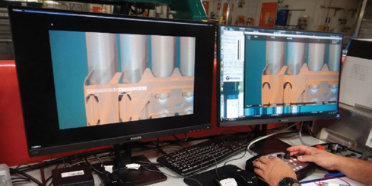
FuelVision™ is an AI‑supported visual inspection technology developed by Westinghouse to enhance the accuracy, consistency and efficiency of commercial nuclear fuel inspections. The system uses standard inspection cameras combined with advanced machine vision and artificial intelligence to automatically detect debris and other anomalies in fuel assemblies—providing an additional, real‑time layer of inspection support alongside qualified fuel inspectors.
Industry Challenge
Visual inspections of nuclear fuel are routinely performed during manufacturing, offloading and poolside inspection activities. Traditionally, these inspections rely on a qualified fuel inspector reviewing live video streams in real time. This approach presents several challenges:
- Inspections are time‑limited and resource‑intensive
- Multiple video streams can increase cognitive load
- There is an inherent risk that small debris or subtle anomalies may be missed during manual review
How it Works
FuelVision combines machine vision, AI and existing hardware into a seamless inspection support system.
Core functional elements include:
- Real‑time object detection and analysis on live video streams
- Automated identification and marking of detected objects directly in the video feed
- Integration with standard cameras, lighting and existing inspection workflows
- Total detection latency of less than 40 milliseconds, with no visible delay to the inspector
Detection Capabilities
FuelVision supports multi‑class detection, enabling automated identification of multiple anomalies simultaneously.
Detected classes include:
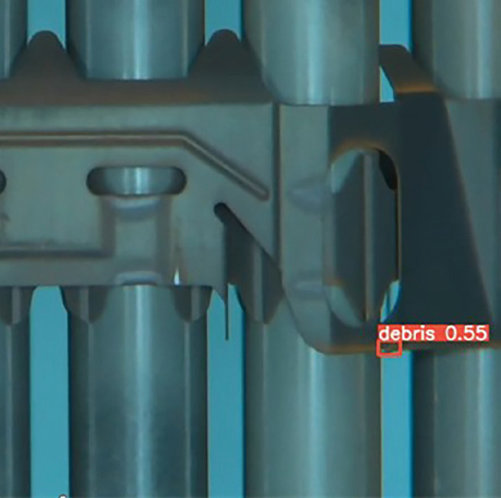
- Debris and foreign material
- Corrosion
- Defect tabs
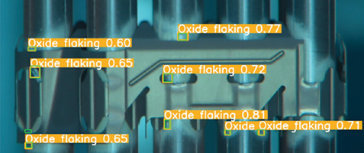
- Oxide flaking
The AI models are trained using annotated datasets and validated using independent data not included in training, supporting robust performance across varying inspection conditions.
Architecture and Deployment
FuelVision consists of two complementary applications:
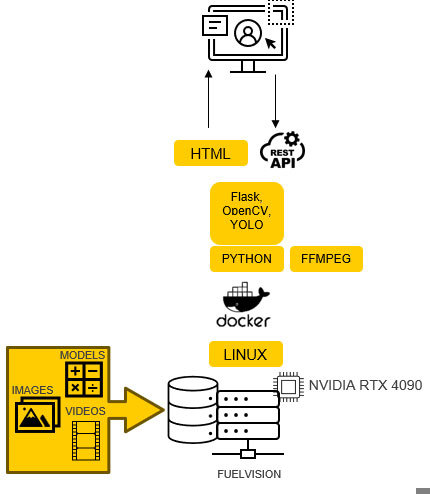
Training and On Demand Inference (Server Based)
- Annotate images and build labeled datasets
- Train AI models by GPU enabled deep learning
- Perform inference on recorded videos
- Summarize objects & inspection results
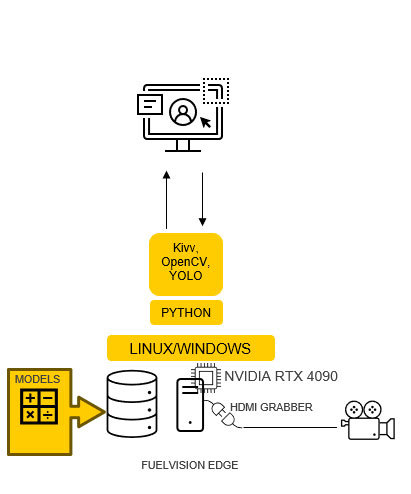
Live Inference (Edge Deployment)
- Deploy trained models to an on‑site system
- Real‑time inference during live inspections
- Operate without network connectivity
- Overlay detections and confidence indicators directly onto the live video feed
Proven Performance & Use Cases
FuelVision has been deployed in the field:
- Trained multiclass models have been used on site during BWR fuel inspection campaigns
- Successfully detected debris that was missed by human inspectors during live inspections
- Models have been verified using independent datasets and real poolside inspection video
Internal demonstrations and deployments confirm:
- Successful use during BWR inspection campaigns in 2024
- Ongoing evaluation for PWR inspection programs
- No visible delay introduced into the inspection workflow directly onto the live video feed
Key Benefits
Inspection Quality and Reliability
- Reduces the risk of missed debris and anomalies
- Provides consistent, objective, independent detection
Operational Efficiency
- High‑speed inspections without slowing workflows
- Operates in parallel with inspectors — not a replacement
- Enables batch and offline analysis of inspection videos
Security and Integration
- Uses existing inspection equipment and workflows
- Operates entirely within the Westinghouse network
- No reliance on external cloud systems
Applications
Inspection Quality and Reliability
- Poolside fuel inspections
- Fuel offloading inspections
- Manufacturing and quality inspections
- Multi face fuel inspection system
The underlying machine vision approach also provides a foundation for potential future extensions into other inspection areas.