Common Q+ Safety Human Machine Interface
Executive Summary
Westinghouse continues to evolve the proven Common Q safety platform under the Common Q+ (CQ+) modernization strategy—preserving licensing foundations while enabling phased upgrades aligned with long-term operation needs. The Safety Human Machine Interface (SHMI) modernizes the qualified operator interface by addressing obsolescence of the PC node box and enabling flat panel display functions within the existing Common Q system architecture.
As part of the CQ+ integrated safety system platform story, SHMI provides a phased modernization path for existing Common Q installations—supporting lifecycle extension and upgrade planning without forcing disruptive rip-and-replace changes.
Safety Human Machine Interface (SHMI)
Modernized processing and software technologies that mitigate obsolescence risk—while preserving the Common Q flat panel display system architecture.
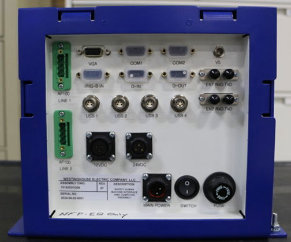
Figure 1 - Safety HMI
Key Features & Capabilities
- Modular design — supports easier replacement of subcomponents, enabling targeted lifecycle management of obsolete subsystem components.
- Forward compatible — the operating system is designed to support future hardware revisions with minimal patching.
- Existing functionality migration — common graphical widgets and generic applications are migrated to help reduce delivery cycle time for project applications.
- Supports AC160 software loads — supports user software loads directly from the display application without rebooting.
- Enhanced seismic performance — more robust connectors and a ruggedized design for safety applications.
- Safety flat panel display system — comprised of SHMI, keyboard, pointing device, and flat panel display.
- AOI communications interface — delivers safety system data to the Ovation system from the safety AF100 bus through the Maintenance and Test Panel (MTP) with minimal data latency. Supports data quality for transmitted points.
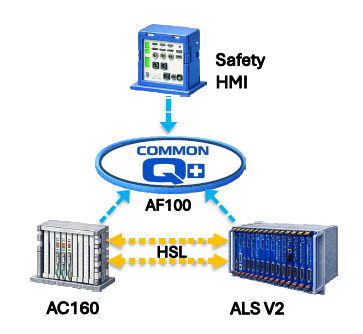
Common Q+ Delivers Interconnectivity and Operability
Customer Benefits
- Mitigates obsolescence risk while protecting existing Common Q investments.
- Supports phased modernization planning as part of the CQ+ integrated safety system roadmap.
- Improves troubleshooting efficiency and reduces time to restore with enhanced diagnostics.
- Maintains compatibility with the existing Common Q system architecture to minimize implementation disruption.
- Enhances cyber security posture with a qualified, cyber-secure operator interface supporting a defense-in-depth strategy.
Why Westinghouse
- Largest global deployment of safety platforms
- Comprehensive lifecycle management commitment
- Proven global delivery track record across AP1000, APR1400, OPR1000 and multiple upgrade programs
- Single accountable partner for architecture, licensing, deployment, and long-term modernization


