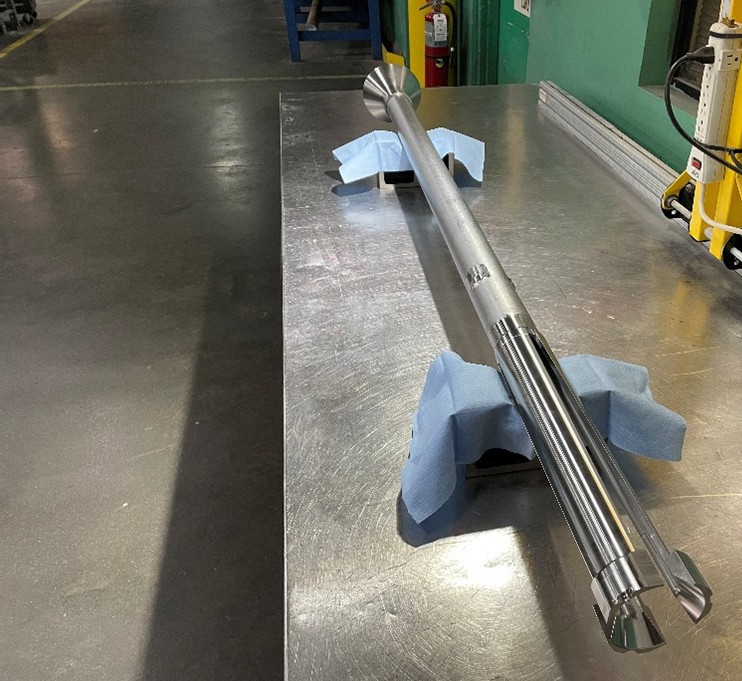
Operating experience has shown that thermal sleeves in the control rod drive mechanism (CRDM) penetration tubes of the reactor vessel head can wear over time in Westinghouse nuclear steam supply system (NSSS) plants. This wear can have potential impact on control rod functionality.
The patented Westinghouse Replacement Compressible Thermal Sleeve has been designed to replace the existing thermal sleeve from under the reactor vessel head instead of the alternative approach which involves cutting into the canopies above the reactor vessel head.
The benefits of the Westinghouse Replacement Compressible Thermal Sleeve are:
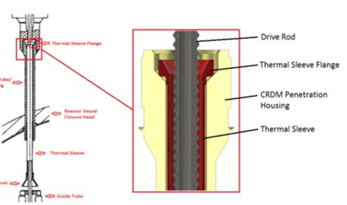
Figure 1 - Original Thermal Sleeve Configuration
The Westinghouse Replacement Compressible Thermal Sleeve (Figure 2) is intended to perform the same deign functions as the original thermal sleeve (Figure 1). It is designed with a flexible upper section and flange which allows the reduction of the diameter through elastic compression. During installation, Westinghouse tooling is used to compress the flange region of the thermal sleeve such that it may be inserted into the head penetration from underneath the reactor vessel closure head.
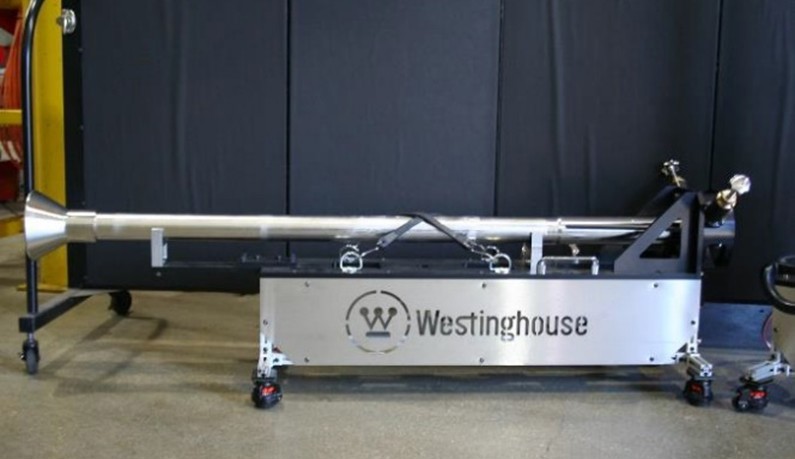
Figure 2 - Compressible Thermal Sleeve
To reduce potential repair response time during an outage, the Replacement Compressible Thermal Sleeve can be procured as part of pre-outage contingency planning. This ensures that, if thermal sleeve flange wear measurements indicate the need for mitigating action, the necessary hardware is readily available.
Additionally, it is advisable to consider developing the engineering qualification package for this replacement hardware. Completing both the long-lead hardware procurement and the engineering qualification package provides a robust level of contingency preparedness. This approach enables a timely and efficient response should flange wear measurements require corrective action.
The Westinghouse Replacement Compressible Thermal Sleeve, designed and fabricated by Westinghouse has been installed across seven (7) different plants worldwide. The first installation was performed in Fall of 2018 and is still in service. A total of forty-one (41) replacement compressible thermal sleeves has been installed, all of which are still in operation.